

Addiction
Barbiturates Addiction
Are barbiturates controlling your life? Take charge today with Harmony Ridge Recovery Center's specialized barbiturates rehab program in West Virginia.
CONTACT US TODAY
Barbiturates are prescription central nervous system depressants, but repeated use can lead to tolerance and physical dependence. Once dependence develops, reducing or stopping the drug can trigger withdrawal as the nervous system adjusts to functioning without its depressant effects. Because barbiturate withdrawal can become medically serious, recovery may need to begin with professional assessment and supervised detox rather than abrupt discontinuation.
At Harmony Ridge Recovery Center WV, barbiturate addiction treatment can begin with medical detox and continue through structured addiction treatment, behavioral therapy, dual diagnosis care, and long-term recovery support. The appropriate level of care depends on the pattern and duration of barbiturate use, withdrawal risk, physical and mental health, relapse history, and the stability of the home environment.
What Are Barbiturates and How Does Dependence Develop?
CONTACT US TODAY
Barbiturates slow activity in the brain and central nervous system. They have been used for sedation, certain seizure disorders, sleep-related conditions, and other medical purposes, although newer medications have replaced them in many situations. Drugs within the class do not all act for the same amount of time: some have shorter durations of action, while phenobarbital is longer acting. These differences influence how quickly effects wear off and can also affect the onset and course of withdrawal.
Repeated exposure changes the body’s response to barbiturates. Tolerance develops when the same amount produces a weaker effect than it previously did, while physical dependence means the nervous system has adapted to the continued presence of the drug. Dependence can occur during prescribed use and does not automatically mean that addiction is present.
Effects and Signs of Barbiturate Addiction
CONTACT US TODAY
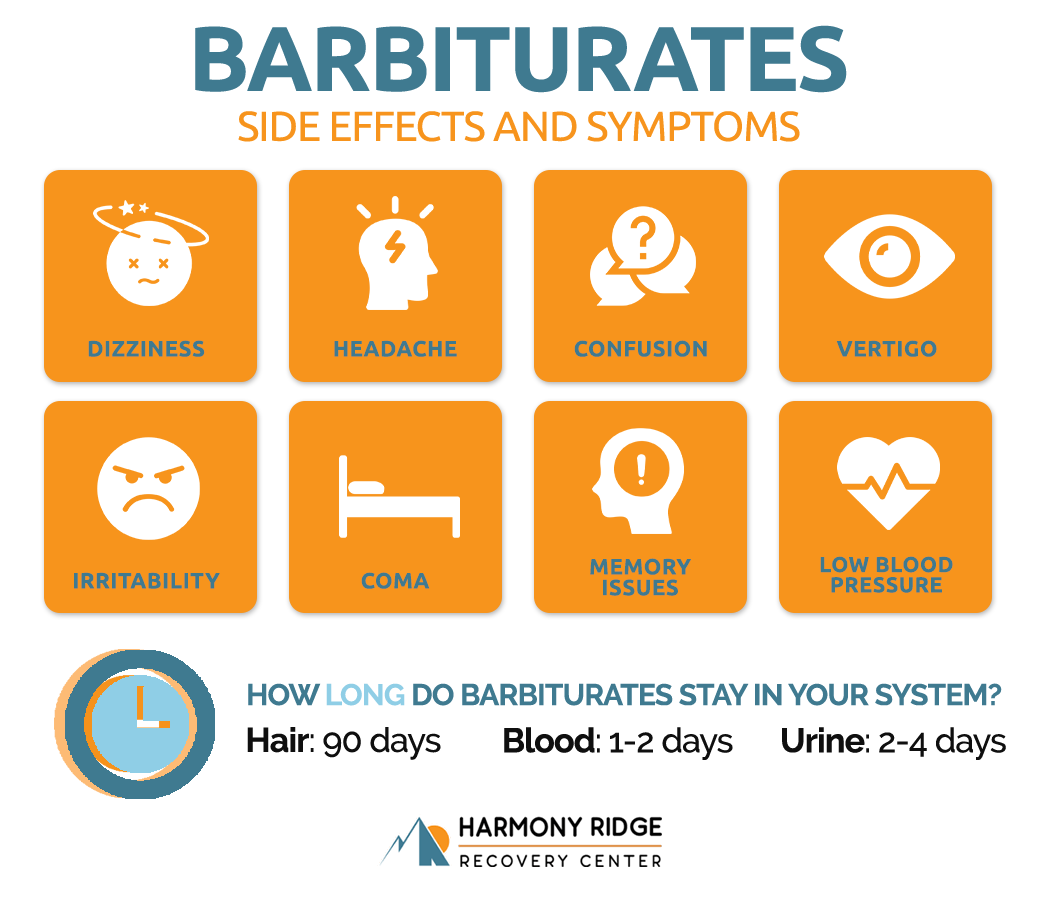
The sedating effect that gives barbiturates their medical value also contributes to their risks. Depending on the medication and dose, effects can include drowsiness, dizziness, slowed thinking, poor coordination, confusion, and problems with memory or concentration. Stronger central nervous system depression can interfere with normal physical functioning and becomes particularly concerning when barbiturates are taken with other depressant substances.
Prescription drug addiction can develop gradually because there is not always a clear point at which therapeutic use becomes problematic. Increasing tolerance, difficulty cutting down, withdrawal between doses, or repeated use despite negative consequences can indicate that the relationship with the medication has changed.
Signs that barbiturate use may require professional evaluation include:
- Taking barbiturates more often or for longer than intended
- Trying to reduce use but repeatedly being unable to do so
- Needing larger amounts to experience the expected effect
- Using barbiturates partly to prevent or relieve withdrawal
- Spending significant time obtaining, using, or recovering from the drug
- Missing work, school, family, or other responsibilities because of use
- Losing interest in activities that were previously important
- Continuing use despite worsening physical or mental health
- Continuing despite repeated relationship or social problems
No single symptom establishes a barbiturate use disorder. Diagnosis depends on the wider pattern of impaired control, consequences, tolerance, withdrawal, and continued use despite harm. This is also why physical dependence and addiction should not be treated as interchangeable terms.
Barbiturate Withdrawal Symptoms
CONTACT US TODAY
Barbiturate withdrawal results from the nervous system adapting to the loss of a drug that has been suppressing its activity. As that depressant effect wears off, nervous system activity can rebound. Anxiety, tremor, restlessness, insomnia, nausea, dizziness, weakness, cardiovascular changes, confusion, and changes in perception can occur during withdrawal, while more severe neurological complications are possible when significant dependence is present.
The course is influenced by the specific barbiturate, how quickly it leaves the body, duration and amount of use, previous withdrawal episodes, physical health, and the presence of other medications or substances.
Common withdrawal symptoms can include:
- Anxiety, irritability, or restlessness
- Difficulty sleeping
- Nausea or digestive discomfort
- Tremors or muscle twitching
- Dizziness or weakness
- Changes in blood pressure
- Confusion or changes in perception
These symptoms should not be viewed only as discomfort that has to be endured until the drug leaves the body. Significant barbiturate dependence can make abrupt discontinuation medically risky, which is why withdrawal assessment and monitoring form an important part of treatment planning.
Barbiturate Withdrawal Timeline
CONTACT US TODAY
The timing below describes a general progression rather than a prediction for every case. Shorter- and longer-acting barbiturates can produce different patterns, and the severity of dependence strongly influences what happens during each stage.
- Early withdrawal — often within the first 8–12 hours: Anxiety, restlessness, weakness, dizziness, tremor, nausea, and sleep disruption can begin as the drug’s depressant effect decreases. Symptoms linked to shorter-acting barbiturates can emerge earlier, while longer-acting medications can delay the beginning of noticeable withdrawal.
- The first 1–3 days: Symptoms can intensify as drug levels continue to fall. Tremor, agitation, insomnia, cardiovascular changes, confusion, and neurological symptoms can become more pronounced during this period. Severe physical dependence increases the importance of medical monitoring because serious withdrawal complications can develop early in the process.
- Days 3–7: Acute withdrawal can continue through the remainder of the first week. Some physical symptoms may begin to ease while anxiety, irritability, sleep disruption, weakness, or general discomfort remain present. The pattern can also change when other substances, medications, or underlying health conditions are involved.
- One to two weeks and beyond: The intensity of acute physical withdrawal generally decreases as the nervous system continues readjusting, but sleep and mood-related symptoms can take longer to settle. At this stage, recovery increasingly shifts away from acute withdrawal management and toward the factors that contributed to continued barbiturate use.
The timeline is useful for understanding why withdrawal needs attention, but it cannot determine whether an unsupervised detox is safe. The specific drug, duration of use, level of dependence, previous withdrawal history, and polysubstance use all affect clinical risk.
Medical Detox for Barbiturate Dependence
CONTACT US TODAY
When significant physical dependence is present, medical detox may be the first stage of treatment. Detox provides a setting where withdrawal symptoms can be monitored, and clinical care can respond if the condition changes, rather than relying on a predetermined schedule or expecting symptoms to follow the same course in every case.
Assessment before and during detox considers the specific barbiturate, duration and pattern of use, previous withdrawal experiences, current medications, physical health, mental health, and use of alcohol or other substances. These details help clinicians estimate withdrawal risk, identify potential complications or substance interactions, and determine what level of support is appropriate.
Detox addresses physical stabilization, but it does not resolve the behavioral patterns that sustain addiction. Once acute withdrawal is under control, treatment shifts toward impaired control over drug use, relapse triggers, co-occurring psychiatric symptoms, conditioned routines, and reliance on sedation or withdrawal relief as reasons for continued use.
Barbiturate Addiction Treatment at Harmony Ridge WV
CONTACT US TODAY
The appropriate level of care depends on withdrawal severity, duration and pattern of barbiturate use, relapse history, co-occurring conditions, home stability, and the ability to function safely outside a structured setting. Treatment therefore does not end when detox is complete, nor does every patient need the same degree of support throughout recovery.
Harmony Ridge offers several levels of care so treatment intensity can change as medical risk, stability, and recovery needs change:
- Residential Rehab provides a highly structured setting away from many of the routines, environments, and triggers associated with substance use. It can be appropriate after detox when continued clinical support and a stable recovery environment are still necessary.
- Partial Hospitalization Program (PHP) offers intensive daytime treatment while allowing more independence outside program hours. PHP can function as a step down from residential treatment or as an entry point when round-the-clock residential care is not required.
- Intensive Outpatient Program (IOP) combines regular therapy and recovery support with greater responsibility for work, family, education, and everyday routines. It helps patients apply recovery skills while still receiving structured clinical support.
- Outpatient Program (OP) provides lower-intensity ongoing care once greater stability has been established and a more independent routine is appropriate.
- Aftercare extends recovery support beyond primary treatment. Continued care can reinforce relapse-prevention strategies, address new challenges, and maintain connection with recovery resources after more intensive programming ends.
Movement between these programs is based on clinical progress rather than a fixed sequence. Recovery can require changes in treatment intensity when symptoms, relapse risk, mental health, or outside circumstances change.
Therapy Addresses What Keeps Barbiturate Use Going
CONTACT US TODAY
Barbiturate addiction treatment needs to address more than physical dependence. Continued use can become reinforced by insomnia, avoidance of distress, cravings, fear of withdrawal, psychiatric symptoms, or routines built around the drug’s sedating effect. Therapy identifies those patterns and develops alternatives that can be used without relying on barbiturates.
Approaches used within addiction treatment can include:
- Cognitive Behavioral Therapy (CBT) examines the relationship between thoughts, emotions, triggers, and substance-use behavior. The work can include identifying beliefs that reinforce barbiturate use and changing automatic responses to cravings or high-risk situations.
- Dialectical Behavior Therapy (DBT) develops skills for tolerating distress, regulating emotions, practicing mindfulness, and handling interpersonal problems without returning immediately to familiar substance-use behaviors.
- Individual therapy provides space to examine the history and function of barbiturate use, previous attempts to stop, relapse triggers, treatment goals, and barriers to recovery.
- Group therapy adds peer feedback and accountability while giving patients opportunities to practice communication, coping strategies, and relapse-prevention skills in a structured setting.
- Family therapy addresses communication, boundaries, trust, and the ways substance use has affected relationships at home. Family involvement can also help establish a more stable recovery environment after treatment.
These approaches are not separate solutions for separate problems. They can be combined within the treatment plan to address both the behaviors surrounding barbiturate use and the circumstances that increase relapse risk.

Barbiturate Addiction and Co-Occurring Mental Health Conditions
CONTACT US TODAY
Co-occurring psychiatric symptoms can complicate barbiturate treatment when the drug has become connected with sedation or relief from distress. Anxiety, depression, trauma-related symptoms, persistent sleep problems, and other mental health concerns can all influence the reasons substance use continues. Removing the drug without addressing symptoms that contributed to its use can leave an important relapse driver unresolved.
The relationship also works in the opposite direction. Ongoing barbiturate use, cycles of intoxication and withdrawal, disrupted sleep, relationship problems, and loss of control can worsen psychological distress. Separating the substance use disorder from mental health symptoms too sharply can therefore overlook the way each problem reinforces the other.
Harmony Ridge provides dual diagnosis treatment when substance use and mental health conditions occur together. Treatment can then address psychiatric symptoms, relapse triggers, coping patterns, and addiction within the same overall plan rather than treating each problem as unrelated.
Why Choose Harmony Ridge for Barbiturate Rehab in West Virginia?
CONTACT US TODAY
Barbiturate treatment can require different kinds of support at different stages. Medical needs are often most important during withdrawal, while later treatment focuses more heavily on relapse risk, behavior, mental health, relationships, and maintaining stability outside a structured setting. Harmony Ridge offers multiple levels of care within the same treatment system so the plan can change as those priorities change.
The approach at Harmony Ridge includes:
- Individualized treatment planning
- Medical and clinical support
- Multiple levels of addiction treatment
- Evidence-based behavioral therapies
- Dual diagnosis care
- Family and peer support
- Relapse-prevention planning
- Continued support after primary treatment
Start Recovery from Barbiturate Addiction at Harmony Ridge
CONTACT US TODAY
Prescription barbiturate use does not always have a clear point at which medical use becomes dependence or addiction. Increasing tolerance, withdrawal between doses, repeated unsuccessful attempts to reduce use, or continued use despite health and life consequences can all signal that professional assessment is appropriate.
Harmony Ridge Recovery Center WV can evaluate current substance use, withdrawal risk, previous attempts to stop, co-occurring conditions, and the level of treatment support that may be needed. Our admissions team is available 24/7 to answer questions about barbiturate addiction treatment, admissions, and insurance. Call (888) 771-8372 or contact Harmony Ridge online to discuss the next step confidentially.
FAQ
CONTACT US TODAY
Can prescribed barbiturates cause physical dependence?
Yes. Physical dependence can develop during repeated or prolonged barbiturate use, even when the medication originally had a legitimate medical purpose. Dependence means the nervous system has adapted to the drug and can react when the dose is reduced or stopped; it is not automatically the same as addiction.
What is the difference between barbiturate dependence and addiction?
Dependence is a physiological adaptation to continued drug exposure. Addiction involves a broader pattern of impaired control and continued use despite harmful consequences. Tolerance and withdrawal can occur with dependence, while substance use disorder is identified by the overall behavioral and clinical pattern.
Can barbiturate withdrawal be managed at home?
Significant barbiturate dependence can make abrupt withdrawal medically serious. Regular or prolonged use should be discussed with a healthcare professional before discontinuation so withdrawal risk and the appropriate level of monitoring can be assessed.
How long does barbiturate withdrawal last?
The most acute symptoms generally occur during the early part of withdrawal and can continue for several days, while sleep, mood, and other symptoms can last longer. The specific drug, duration and amount of use, degree of dependence, previous withdrawal history, health conditions, and use of other substances can all change the timeline.
How long do barbiturates stay in your system?
There is no single detection window for the entire drug class. Shorter- and longer-acting barbiturates remain active for different periods, while detection also varies according to the type of test, dose history, frequency of use, metabolism, and other individual factors.
Is detox enough to treat barbiturate addiction?
Detox manages the physical process of stopping the drug, but it does not address impaired control, relapse triggers, psychiatric symptoms, behavioral patterns, or the circumstances that reinforced continued use. Structured addiction treatment and therapy address those longer-term recovery needs.
Does insurance cover barbiturate addiction treatment?
Coverage depends on the insurance provider, individual plan, level of care, and medical necessity. Harmony Ridge works with multiple insurance providers, and the admissions team can verify benefits and explain available coverage before treatment begins.
Jump To Section
Our Locations
Begin Your Journey to Healing Here


Ask me about recovery, I can help you!
Our recovery specialists are standing by 24/7 to help you or your loved one.
Or call us: 
